

CALL 702-935-3299 OR
Water Line Repair: Signs You Should Act Fast
A water line can fail quietly behind a wall, beneath a slab, or out in the yard while the damage keeps spreading. Prompt water line repair can prevent a manageable leak from becoming warped flooring, damaged drywall, mold growth, a disrupted business day, or an unexpectedly high water bill.
For homeowners, the first clue is often a change in water pressure or a wet area that should be dry. For commercial properties, it may be a sudden increase in water use, complaints from tenants, or an interruption that affects restrooms, kitchens, or daily operations. Knowing what to watch for helps you act before water reaches the parts of the property that are hardest and most expensive to restore.
Signs You May Need Water Line Repair
Not every plumbing issue points to a broken water line. A clogged fixture, failing faucet cartridge, or leaking appliance connection can produce similar symptoms. Still, several warning signs deserve professional attention, particularly when they appear without an obvious cause.
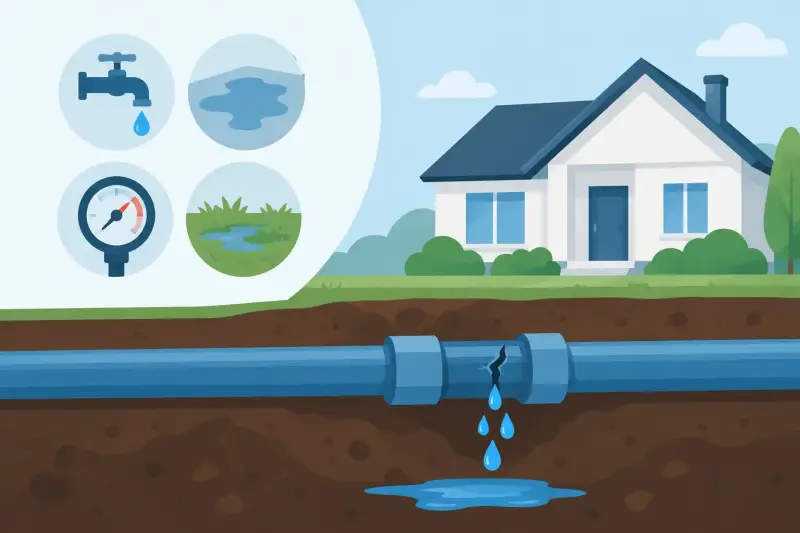
Low water pressure throughout the building is one of the more common signals. If only one shower or sink has weak flow, the issue may be limited to that fixture. When pressure drops at multiple fixtures, a damaged supply line, corroded pipe, pressure regulator problem, or hidden leak becomes more likely.
A water bill that rises sharply without a change in household or business activity is another concern. Even a small leak can waste a surprising amount of water over a month. Compare current usage with prior bills, then consider whether irrigation, guests, construction, or seasonal operations explain the increase. If they do not, a plumbing inspection is a practical next step.
Watch for damp spots, discoloration, bubbling paint, soft flooring, or a persistent musty smell. Indoors, these signs can indicate water moving behind finished surfaces. Outdoors, unusually green grass, soft soil, standing water, or a continually damp section of pavement may point to an underground line leak.
Other signs include the sound of running water when all fixtures are off, cloudy or discolored water, recurring leaks in the same area, and reduced hot-water flow that does not appear related to the water heater. None of these symptoms should be ignored simply because the property still has water service. A line can continue working while steadily damaging the structure around it.
What Causes Water Lines to Fail?
Water lines age under constant use, pressure, and environmental stress. In older properties, corrosion is often a major factor. Metal piping can thin from the inside out, eventually developing pinhole leaks or weak sections that fail under normal water pressure.
Southern California conditions can also contribute to trouble below ground. Soil movement, nearby construction, tree roots, and shifting foundations may place stress on buried pipes. A line that was installed with a weak connection or inadequate protection can become more vulnerable over time.
High water pressure is another issue worth checking. Excessive pressure can strain pipe joints, valves, appliance hoses, and fixtures throughout a home or commercial building. A repair may stop the immediate leak, but correcting the underlying pressure problem can help avoid repeated failures.
Accidental damage happens, too. Yard work, fence posts, trenching, and renovation projects can strike underground water lines. When a visible break occurs, shut off the water supply if it is safe to do so and arrange service quickly. Waiting can increase water loss and may undermine soil around walkways, foundations, or hardscape.
Why Fast Repairs Protect More Than Plumbing
Water follows the path of least resistance. That means a leak can travel far from its original source before it becomes visible. By the time a ceiling stain or wet carpet appears, moisture may already be affecting insulation, framing, cabinets, electrical areas, or adjoining units.
For a business, the cost is not limited to the repair itself. Water line problems can interrupt customer service, create slip hazards, require restroom closures, damage inventory, and affect tenant satisfaction. Facility managers often need a repair plan that considers access, operating hours, safety, and the least disruptive way to complete the work.
There is also a water-conservation reason to act promptly. A hidden leak wastes a resource that California property owners cannot afford to overlook. Repairing it can reduce unnecessary usage while protecting the property from the far larger cost of water damage restoration.
How Professional Water Line Repair Works
A reliable repair begins with diagnosis, not guesswork. A plumber first reviews the symptoms, checks accessible connections and fixtures, and evaluates pressure and water usage. Depending on the situation, leak detection methods may help narrow down the source without opening walls or excavating more of the property than necessary.
Once the problem is located, the right solution depends on the pipe material, the location of the damage, and the condition of the surrounding line. A small, isolated failure may be resolved with a targeted repair. A line with widespread corrosion, repeated leaks, or significant deterioration may be better served by partial replacement or repiping.
For underground lines, the repair method also depends on access and site conditions. Conventional excavation provides direct access but may disturb landscaping, concrete, or other surfaces. In some cases, less invasive methods may be available. The best option is not always the one with the smallest opening - it is the option that addresses the failure properly and makes sense for the property's long-term condition.
Before work begins, ask for a straightforward explanation of the findings, recommended repair, expected disruption, and pricing. Clear communication matters, especially when the line serves a shared building, restaurant, office, rental property, or other site where downtime has real consequences.
What You Can Do Before the Plumber Arrives
If you suspect an active leak, avoid using extra water until the issue is assessed. Locate the main shutoff valve before an emergency happens so you can stop water flow if a pipe breaks. In many homes, it is near the water meter, garage, exterior wall, or where the main line enters the building. Commercial properties may have multiple valves, so facility teams should keep their locations documented.
Move belongings away from wet areas and take photos of visible damage for your records. Do not cut into walls, dig around suspected underground lines, or attempt to patch a pressurized pipe unless you have the training and tools to do so. Temporary fixes can fail, conceal the true source, or make the final repair more complicated.
If water is near outlets, electrical panels, appliances, or equipment, treat it as a safety concern. Keep people away from the area and seek appropriate professional help immediately.
Preventing the Next Water Line Problem
Some water line failures cannot be predicted, but routine attention reduces risk. Periodically check under sinks, around water heaters, near appliances, and along exposed piping for moisture or corrosion. Review water bills for unexplained changes and investigate recurring drops in pressure rather than accepting them as normal.
For commercial properties and older homes, scheduled plumbing inspections can be especially useful. They help identify worn valves, pressure concerns, aging connections, and early leak indicators before a small defect creates a disruptive emergency. Maintenance also gives property owners a clearer picture of where future replacement planning may be needed.
When water is escaping where it should not, speed and accuracy matter. HVAC Pros can help Anaheim-area homeowners and property managers identify the source, explain the repair options clearly, and restore reliable water service with as little disruption as possible. A quick call at the first warning sign can protect the spaces and people who depend on your property every day.