

607-533-1380 HVAC
702-935-3299 PLUMBING
Ductless Mini Split Repair Anaheim Warning Signs
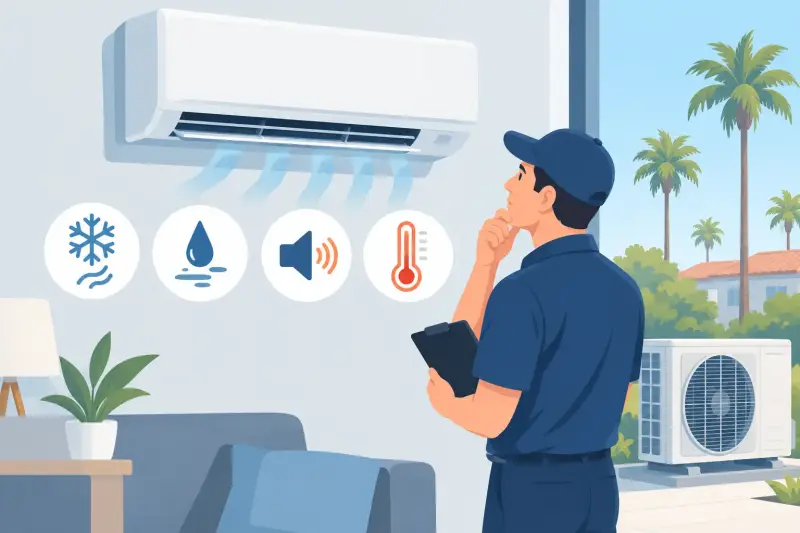
A ductless system often gives a warning before it stops cooling or heating altogether. One room may feel warmer than the others, airflow may weaken, or the indoor unit may start dripping onto a wall. Acting on those signs early can make ductless mini split repair Anaheim property owners need far less disruptive than waiting for a complete breakdown.
Mini splits are efficient, flexible systems, but they are not maintenance-free. Because each indoor head, drain line, refrigerant connection, and outdoor unit must work together, a small problem in one area can affect comfort, energy use, and equipment life. The right response depends on what the system is doing, what you can safely check, and when it is time to bring in a qualified HVAC technician.
Signs You May Need Ductless Mini Split Repair in Anaheim
A mini split that is running but not keeping the room comfortable deserves attention. If the air coming from the indoor unit is only mildly cool during AC operation, the cause could be a dirty filter, a blocked outdoor coil, a thermostat or control setting issue, or a refrigerant-related problem. Those causes require very different repairs, which is why guessing can lead to unnecessary expense.
Water around or below the indoor unit is another common concern. In cooling mode, the system naturally removes moisture from indoor air. That water should travel through a condensate drain. When the drain becomes clogged, disconnected, or improperly pitched, water can back up and leak into finished walls, flooring, or furnishings. Turn the system off if water is actively leaking, protect the area below it, and arrange service promptly.
Unusual noise should also be taken seriously. A light change in fan sound may come from dust buildup, but rattling, grinding, buzzing, or repeated clicking can point to loose parts, a failing fan motor, electrical trouble, or an issue at the outdoor condenser. Do not keep restarting a unit that is making harsh noises or repeatedly trips a breaker.
Other warning signs include a musty odor, ice on the indoor or outdoor equipment, frequent short cycling, error codes on the display, or an unexplained rise in electric bills. For commercial spaces, even a single underperforming head can affect customer comfort, employee productivity, or sensitive equipment in a server, storage, or office area.
What You Can Check Before Calling for Service
A few simple checks can rule out basic operating problems without putting you at risk. Confirm that the system is set to the correct mode. Cooling, heating, fan-only, and dry modes can feel very different, and a remote-control setting can be changed accidentally. Set the desired temperature several degrees below the current room temperature for cooling, or above it for heating, then give the unit time to respond.
Next, inspect the washable filters in the indoor head. If they are visibly coated with dust, clean them according to the manufacturer instructions, let them dry completely, and reinstall them. Restricted filters reduce airflow and can contribute to poor performance or icing. Keep furniture, curtains, and stored items clear of both the indoor head and outdoor unit.
Look outside for obvious debris around the condenser. Leaves, loose plastic, landscaping growth, and stacked boxes can limit airflow. You can remove loose debris from around the unit, but do not spray the coil with high pressure, remove electrical panels, or attempt to straighten damaged coil fins without the proper tools.
If the unit has an error code, record it along with the brand, model number, the rooms affected, and when the issue began. That information helps a technician arrive better prepared. Avoid resetting the breaker multiple times. A single reset after a storm or known outage may be reasonable, but a breaker that trips again is a safety concern, not a nuisance to work around.
Why Professional Diagnosis Matters
Ductless mini splits use electronic controls and refrigerant circuits that need accurate testing. A system that is not cooling may have a refrigerant leak, but it could also have a faulty sensor, communication error, dirty coil, failing capacitor, damaged wiring, or a drain safety switch shutting the unit down. Adding refrigerant without finding and correcting a leak only postpones the problem.
A proper repair visit should start with the basics: checking system operation, airflow, filters, coils, electrical connections, drain performance, and controller settings. From there, the technician can test components and identify the actual failure rather than replacing parts based on symptoms alone. This approach protects both the equipment and your budget.
For older equipment, repair versus replacement is not always an automatic decision. A straightforward drain clearing, electrical repair, or fan component replacement may be worthwhile when the rest of the system is in good condition. If a system has recurring refrigerant leaks, major compressor trouble, discontinued parts, or repeated failures across multiple heads, replacement may offer better long-term value. The best choice depends on repair cost, system age, efficiency, and how reliably the space needs to stay conditioned.
Common Mini Split Problems and Their Likely Causes
Dirty filters and coils are among the most preventable causes of weak airflow and reduced efficiency. Anaheim homes and businesses can accumulate dust quickly, especially near traffic, construction activity, pets, kitchens, or high-occupancy rooms. Regular cleaning helps, but deep coil cleaning and blower-wheel service are jobs best handled during professional maintenance.
Drain problems are especially urgent because the comfort system can become a property-damage issue. A clogged condensate line may cause a leak at the indoor head, while a failed condensate pump can create the same symptom where gravity drainage is not possible. Prompt repair can prevent stained drywall, damaged flooring, and mold-friendly moisture conditions.
Refrigerant issues require specialized handling. Frost or ice may suggest low refrigerant, but it can also result from poor airflow. A technician needs to inspect the complete system before deciding on a repair. Refrigerant should never be treated as a routine refill; the system should be sealed and operating within manufacturer specifications.
Electrical and communication faults are another reason to call for service. Mini split systems rely on wiring between the indoor and outdoor equipment. Power fluctuations, age, pests, loose connections, and component failure can interrupt that communication. If one head is working while another is not, the source may be local to that zone, but a professional test is still needed to confirm it.
Preventing Another Unexpected Breakdown
The most useful maintenance plan is one that matches how the system is used. A mini split serving a lightly used guest room may need less attention than a unit conditioning a busy retail area, restaurant office, rental property, or main family living space. In most cases, homeowners should check filters regularly and schedule professional maintenance at least annually. Systems used heavily for both heating and cooling may benefit from more frequent service.
Professional maintenance is not just a cleaning visit. It gives a technician the opportunity to inspect drainage, electrical parts, refrigerant performance, airflow, coil condition, and overall operation before a minor issue becomes an emergency call. It can also reveal developing problems that would otherwise show up during the hottest or coldest stretch of the year.
For property managers and business owners, documented maintenance supports continuity. A planned visit is easier to schedule than a same-day response when an occupied office, tenant unit, or customer-facing space loses cooling. HVAC Pros can help residential and commercial customers address current repairs while building a maintenance approach that supports efficient, dependable operation.
When a ductless system changes the way it sounds, drains, cools, or heats, trust the change. A quick professional diagnosis can protect comfort now and help you avoid a larger repair when your property needs reliable climate control most.