

HVAC
PLUMBING
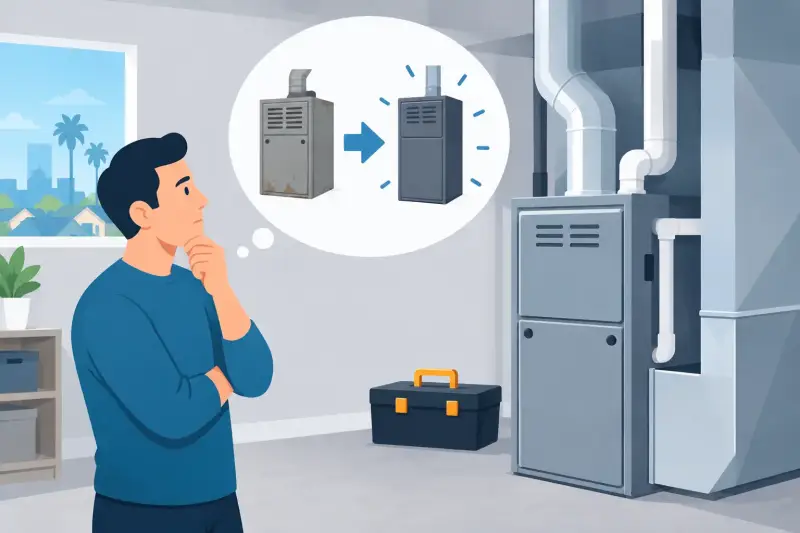
Furnace Replacement Anaheim: When Is It Time?
A furnace rarely fails at a convenient time. It may start making new noises during a cool evening, heat some rooms but not others, or stop running when your family or tenants need it most. Planning furnace replacement Anaheim property owners can rely on means looking beyond a single repair bill and deciding whether the existing system can still provide safe, efficient heat.
For homes and commercial spaces in Southern California, heating equipment may not run as heavily as it does in colder regions. That can extend its calendar life, but it can also hide developing problems. A furnace that sits idle for long stretches can still have worn electrical components, airflow issues, aging duct connections, or safety concerns that only appear when the temperature drops.
When Furnace Replacement Makes More Sense Than Repair
No one should replace a furnace simply because it needs service. Many issues - such as a failed igniter, dirty flame sensor, worn capacitor, or thermostat problem - can be repaired quickly and professionally. The more useful question is whether a repair restores reliable operation or merely delays the next failure.
Age is one of the clearest factors. A well-maintained furnace can often operate for 15 to 20 years, though actual life depends on usage, installation quality, maintenance history, and the condition of the ductwork. If the system is nearing that range and has started requiring frequent repairs, replacement deserves a serious conversation.
Pay attention to changes in comfort and operating behavior. A furnace that runs longer than it used to, cycles on and off repeatedly, leaves cold areas around the building, or produces unusual rattling, banging, or whistling may have a problem that goes beyond routine maintenance. Rising utility costs can also signal declining efficiency, especially when household habits have not changed.
For gas furnaces, safety is never a wait-and-see issue. A yellow or unstable burner flame, soot around the unit, persistent gas odors, or a carbon monoxide alarm requires prompt professional attention. Turn the system off if it is safe to do so, leave the area if you suspect a gas leak or carbon monoxide exposure, and seek emergency assistance. Replacement may or may not be necessary, but the equipment should be inspected before it is used again.
The Repair-versus-Replacement Decision
A repair can be the right financial choice for a newer furnace with a clear, isolated issue. It is often less sensible when the unit has a costly major failure, several recent repair visits, and an efficiency level far below current equipment.
A practical way to evaluate the decision is to consider the repair cost alongside the furnace's age, service history, expected remaining life, and performance. A modest repair on a 10-year-old unit may be reasonable. Replacing a major component on a furnace that is already 18 years old and unreliable is a different situation. A straightforward quote should explain the condition of the current equipment and the options available, rather than pressuring you into a one-size-fits-all answer.
What a Proper Furnace Replacement in Anaheim Should Include
The furnace itself matters, but the installation process has just as much influence on comfort, energy use, and equipment life. A high-efficiency unit installed with poor airflow or incorrect sizing will not deliver the results homeowners expect.
The first step should be an evaluation of the property, not a recommendation based only on the old furnace's label. A qualified technician considers the building's square footage, insulation, windows, ceiling height, orientation, occupancy, and duct system. For commercial properties, operating hours, heat-producing equipment, tenant needs, and zoning requirements can also affect the design.
Correct sizing is particularly important in Anaheim's generally mild climate. Oversizing is not a shortcut to better comfort. An oversized furnace can heat the space too quickly, cycle more often, create uneven temperatures, and add unnecessary wear. An undersized unit may run for long periods without keeping up during colder weather. The goal is balanced, dependable heat, not the largest unit available.
Ductwork should be part of the conversation. Leaks, restrictions, poor connections, and inadequate return-air pathways can waste conditioned air and make a new furnace seem ineffective. In some properties, duct repairs or modifications are needed to help the replacement system perform as intended. This is also a good time to check filtration, thermostat placement, and indoor air quality needs.
Choosing Features That Fit the Property
Furnaces are available with different efficiency ratings, blower designs, and staging options. Higher-efficiency equipment can reduce fuel use, but the best choice depends on how often the system runs, the condition of the home or building, and the available budget.
A single-stage furnace operates at one heating output. It can be a sensible, reliable option for many properties. Two-stage and variable-speed equipment can offer more even temperatures and quieter operation, particularly when paired with compatible controls and properly designed ductwork. Those benefits can be worthwhile, but they are not automatic. The right recommendation should connect the equipment features to the comfort concerns you actually have.
If your air conditioner is also aging, consider the condition of the full HVAC system. The indoor blower, ductwork, thermostat, and outdoor cooling equipment work together. Replacing only one component can be appropriate, but a coordinated plan may prevent compatibility problems and avoid another major installation in the near future.
Preparing for Installation Day
A furnace replacement is usually manageable when expectations are clear. Before the appointment, clear a path to the furnace, attic access, electrical panel, and thermostat. Move stored items away from the equipment area, and make arrangements for pets, children, employees, or tenants who may be affected by temporary noise and access needs.
The installation team should protect the work area, remove the old equipment, install and connect the new system, and test its operation. Depending on the project, the work may include adjustments to the gas connection, electrical components, venting, condensate drainage, thermostat, or duct connections. Permit and inspection requirements can apply, so confirm how those details will be handled before work begins.
Before the technicians leave, ask for a clear walkthrough. You should know how to operate the thermostat, replace or inspect filters, recognize normal system sounds, and identify signs that warrant a service call. Keep the equipment information and maintenance records in an accessible place. That documentation can be useful for warranty needs and future service decisions.
Protecting the New Furnace After Installation
Replacement solves the problem of aging equipment, but it does not eliminate the need for care. A new furnace still needs clean airflow, regular inspections, and timely attention when something changes.
Replace filters on the schedule appropriate for your filter type, household, and system use. A clogged filter can restrict airflow, increase energy use, and put extra strain on the blower and heat exchanger. Keep supply and return vents open and unobstructed, and avoid storing belongings near the furnace.
Professional preventive maintenance is the best way to catch minor concerns before they become a no-heat call. During a maintenance visit, a technician can check combustion safety, electrical connections, airflow, burners, the blower assembly, controls, and overall system performance. For property managers and business owners, planned service also helps reduce disruptions for occupants and keeps maintenance spending more predictable.
A replacement decision is ultimately about confidence. You want heat that starts when it should, reaches the rooms that need it, and operates without constant worry. When an older furnace is becoming expensive or unreliable, HVAC Pros can assess the system, explain the practical options, and help you move forward with a solution built for dependable comfort.