

607-533-1380 CALL TODAY
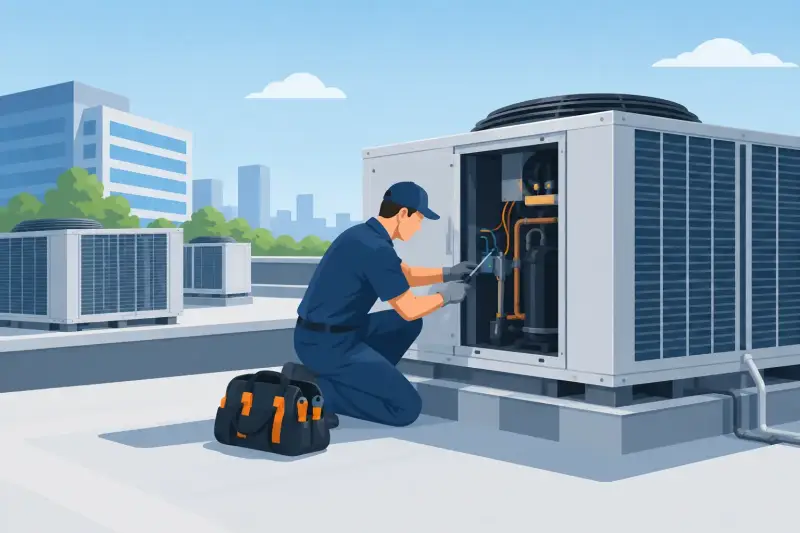
Commercial HVAC Maintenance That Prevents Downtime
A failed rooftop unit at 2 p.m. can turn a busy restaurant, office, retail floor, or apartment common area into a customer-service problem within minutes. Commercial HVAC maintenance gives property owners and facility managers a better option: find small issues while they are manageable, schedule work around operations, and keep equipment ready for Southern California heat.
For most businesses, maintenance is not about making equipment look clean or checking a box for a warranty file. It is about protecting occupancy, employee comfort, inventory, tenant satisfaction, and operating costs. The right program is practical, documented, and built around the way your property actually runs.
Why Commercial HVAC Maintenance Matters
Commercial HVAC systems work harder than many owners realize. They may run through long business hours, manage heat from people and equipment, serve multiple zones, and operate in dusty outdoor conditions. A unit can still produce cool air while using far more energy than it should or putting extra strain on a compressor, blower motor, or electrical component.
Preventive service addresses that slow decline before it becomes a no-cooling call. A technician can spot worn belts, dirty coils, loose electrical connections, drainage problems, low refrigerant indicators, and control issues that are easy to miss during a normal workday. Addressing these items early is usually less disruptive and less expensive than arranging an emergency repair after a system fails.
There is also a comfort and reputation issue. Customers may leave a hot store sooner. Employees lose focus in poorly cooled work areas. Tenants expect a landlord to respond when their suite is uncomfortable. Consistent maintenance supports the quiet, reliable operation that people notice only when it disappears.
Maintenance protects more than the air conditioner
Heating equipment needs attention, too. Even in Anaheim, commercial furnaces and heat pumps support early-morning operations, seasonal cold snaps, and properties that require stable temperatures year-round. Inspections can identify ignition concerns, airflow restrictions, damaged venting, safety-control issues, and signs of wear before the first time a system is asked to heat a building.
Indoor air quality is part of the picture. Clogged filters, dirty coils, standing water in drain pans, and neglected ductwork can affect airflow and indoor conditions. The correct approach depends on the building and its occupants. A small office has different needs from a medical practice, food-service location, warehouse, or multi-tenant retail property.
What a Commercial HVAC Maintenance Visit Should Cover
A useful maintenance visit is more than a quick filter change. The exact checklist should be based on equipment type, age, usage, manufacturer requirements, and any concerns reported by the property team. Still, a thorough visit typically includes an assessment of cooling, heating, airflow, controls, electrical components, and drainage.
Technicians should inspect filters and replace them when needed, then check blower components, belts, bearings, and motors for wear. They should examine evaporator and condenser coils, because dirt on either surface can reduce heat transfer and force the system to run longer. Coil cleaning is especially valuable when conditions justify it, but it should be performed carefully to avoid damage.
Electrical checks matter because loose connections and failing capacitors can lead to intermittent performance or sudden shutdowns. A technician may test operating readings, inspect contactors and wiring, verify thermostat or building-control response, and look for signs that the unit is short cycling or running outside normal ranges.
Drain lines and condensate pans deserve attention as well. A blocked drain can cause water damage, ceiling stains, odors, or an equipment shutdown. For properties where HVAC and plumbing systems are both essential, working with one accountable mechanical-services provider can simplify communication when a drainage concern crosses system lines.
The visit should end with clear findings. Property decision-makers need to know what was completed, what should be watched, what requires repair, and which recommendations are urgent versus optional planning items. A straightforward quote and a clear explanation are more useful than a long report filled with unexplained technical terms.
How Often Should Commercial Systems Be Serviced?
Many commercial properties benefit from service twice a year: once before cooling season and once before heating season. This schedule works well for standard offices, shops, and many light-commercial spaces because it prepares each side of the system before demand increases.
However, twice-yearly service is not a universal answer. Restaurants, medical facilities, gyms, data-sensitive rooms, manufacturing spaces, and high-occupancy properties may need more frequent visits. Grease, dust, extended run times, equipment heat, and strict comfort requirements all increase the value of closer monitoring. A warehouse with limited conditioning may need a different plan than a retail center where every customer area must remain comfortable all day.
Filter changes often need to happen more frequently than full preventive visits. Rather than choosing intervals by habit, track filter condition, occupancy, outdoor dust exposure, and airflow performance. Filters changed too late can raise energy use and reduce comfort. Filters changed unnecessarily add cost without solving a real problem.
Build maintenance around your operating calendar
The best service timing is often the least visible timing. Schedule planned work before summer heat arrives, before a high-sales season, or during lower-occupancy hours when possible. If a repair is recommended, ask whether it can be completed in a planned window rather than waiting for the part to fail during peak demand.
Facility managers should also keep a simple equipment record. Document unit locations, model information, past repairs, filter sizes, recurring concerns, and service dates. This makes diagnosis faster, helps with budget planning, and prevents useful knowledge from leaving when staff roles change.
Warning Signs That Should Not Wait for the Next Visit
Not every concern is an emergency, but waiting can turn a modest repair into a larger disruption. Arrange professional service promptly if you notice four common problems: uneven temperatures between zones, repeated thermostat adjustments with little effect, unusual noises or odors, and water around indoor equipment or ceiling areas.
Higher utility bills can also be a warning sign, particularly when operating hours and weather are similar to prior periods. The cause may be as simple as a dirty filter or coil, but it can also point to failing components, control problems, poor airflow, or refrigerant-related issues. A technician should diagnose the cause instead of treating the bill alone as proof that replacement is necessary.
Frequent cycling, breaker trips, or a unit that starts and stops unpredictably should be taken seriously. Electrical and mechanical problems can worsen quickly under heavy load. If comfort loss affects customers, tenants, sensitive equipment, or safety, emergency service may be the right choice.
Maintenance, Repair, or Replacement: Making the Right Call
A maintenance agreement does not mean every older unit should be kept indefinitely. Its value is that it provides real operating information before a rushed decision is required. Technicians can identify whether a repair is likely to restore dependable performance or whether repeated breakdowns, poor efficiency, unavailable parts, and age make replacement a better business decision.
Replacement can lower operating costs and improve comfort, but it requires planning, capital, and potential coordination with tenants or business hours. Repair is often sensible when the equipment is otherwise sound and the issue is isolated. The answer depends on the equipment condition, repair history, expected remaining life, and how costly a failure would be for your property.
Ask for options when a significant repair is recommended. A capable contractor should explain the immediate repair, the risks of deferring it, and any longer-term replacement path without pressuring you into a decision that does not fit your budget or operation.
A Maintenance Plan Should Make Your Job Easier
A commercial program works best when it has a defined schedule, documented inspections, priority service expectations, and clear communication about repairs. It should reduce surprises, not create paperwork or recurring recommendations with no explanation.
HVAC Pros helps Anaheim-area property owners and managers maintain heating and cooling systems with practical preventive service, fast diagnosis, and straightforward quotes. Whether you oversee one storefront or several properties, the goal is the same: fewer interruptions and equipment that performs when your business needs it.
Do not wait for the first hot day to find out which unit has been struggling. A planned inspection gives you time to make decisions calmly, schedule work around your operation, and keep the people inside your property comfortable.